The full report
Plan the frames first
The clearest pattern today is people deciding the images before any video exists. The AI Anime Series repo fixes two original characters with three-view sheets, draws a nine-panel storyboard on the same canvas, then hands the sheets, the board and a per-second shot list to Seedance 2.5 so the whole 30 seconds is generated in one pass. It ships as a Claude Code skill, so a one-line request produces the script, the prompts and a frame check.
The h3-ref-video repo uses the same idea with a cost angle. For a whole script it draws one storyboard frame per shot with GPT Image 2.5, then lets MiniMax H3 follow those frames. The README reports a 27-second, 11-shot vertical film for about 2.12 yuan in 9 minutes against roughly 2.8 yuan for a Seedance mini render; those figures are the author's own. Around them sit smaller helpers for the same step: a free library of 280 mannequin poses drawn from five angles, and a Claude skill that writes a full photoreal character-sheet prompt from one sentence.
Open apps keep arriving around ComfyUI
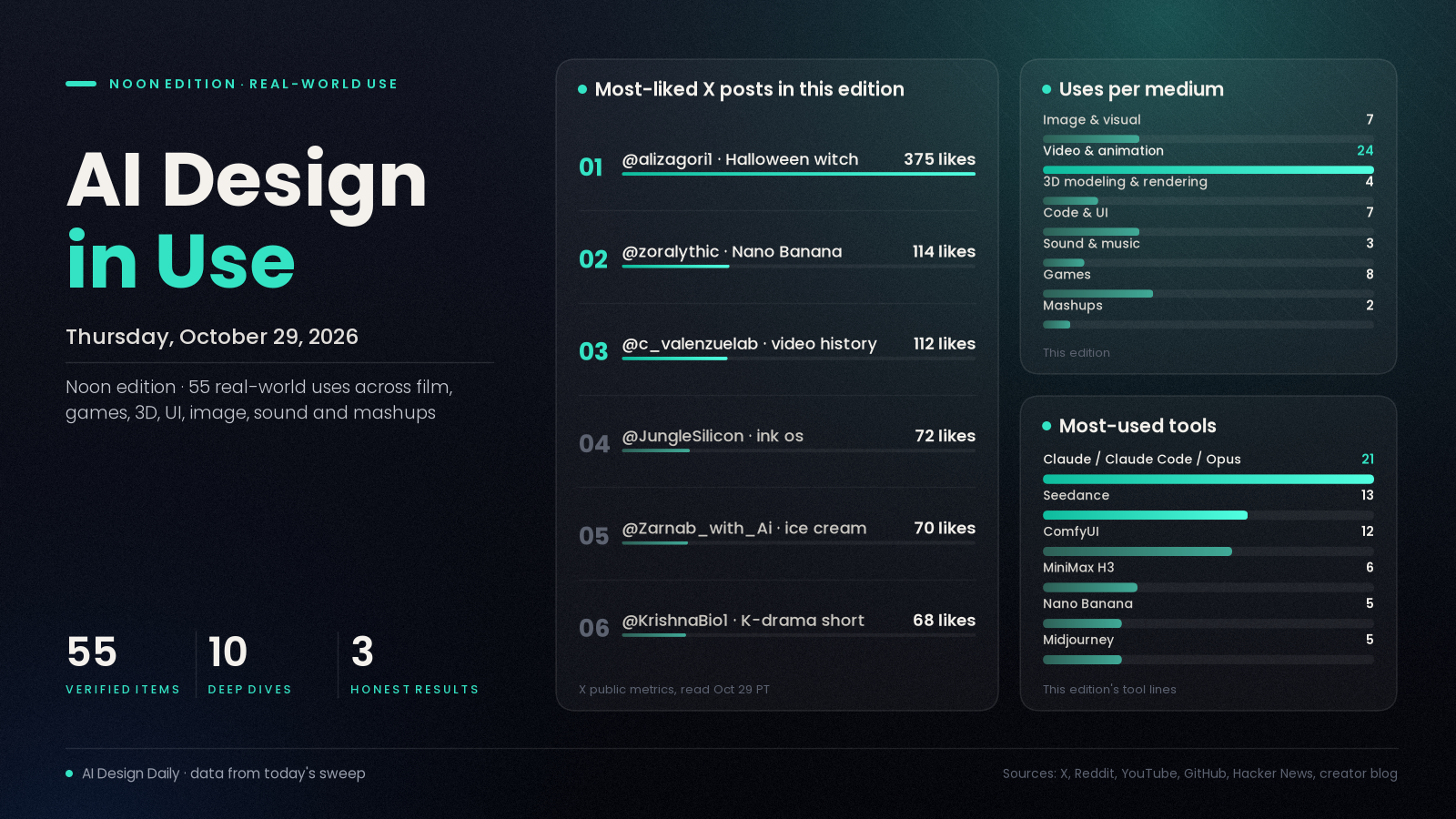
This morning's edition covered the first wave of entries for Comfy's open-source app challenge, and more kept coming. Director's Cut pairs preset character creation with a video studio and an MCP server; Kitty Open Studio offers 33 open-weights workflows, a timeline and Claude or ChatGPT directing a music video over MCP; and a panel puts ComfyUI inside the EffectCraft compositor with a workflow on each timeline marker.
Smaller tools show how people use these models for finishing work. One node mattes a single person out of a crowd at 4K, with the author reporting an 88.7% edge-detail match against 45.0% for the older method on one 247-frame shot. A 3-step Krea 2 LoRA claims 2.6x faster denoising, and a guider node makes Krea 2 images that read as something else when flipped. A MiniMax H3 realism test is candid about its own flaws, from a broken 180-degree rule to a six-hour render.
Agents as studio hands
Several makers described the agent as a collaborator on the canvas rather than a chat window. Recto is a native canvas where Claude Code, Codex, Cursor or OpenCode build UI, SVG, 3D and motion while you move things directly. Tella's new agent edits video in the browser with the same tools as its MCP. ink os, built in a day in a language its maker also wrote, lets friends vibe-code apps onto a shared computer. A ToolJet flowchart updates itself when a process step changes.
In 3D, StableGen puts the whole path from prompt to rigged, textured asset inside Blender, and print3d-designer has an agent check silhouettes and G-code before anything is printed. The limits show too: a creator porting OutRun says Claude could not fix an audio crackle and a human had to finish.
Games, honest results
Game makers gave the most concrete process notes. One lists five steps: concept art, a plan with Opus 5.5, a tested prototype, assets from Meshy and ElevenLabs, then multiplayer on Fly.io. A VR game with 30 levels and 10 bosses was vibe-coded, and the maker says Claude played it to record the trailer. A Substack author told Claude to turn their Android game into a Meta Quest game and says about two hours later an isometric scene was running in 3D, though they have not read the code and the Quest version is not out yet. A Russian-language video follows 26 hours and 1.5 billion tokens spent on a Minecraft-style game, on a third attempt after two collapsed.
Video, ads and breakouts
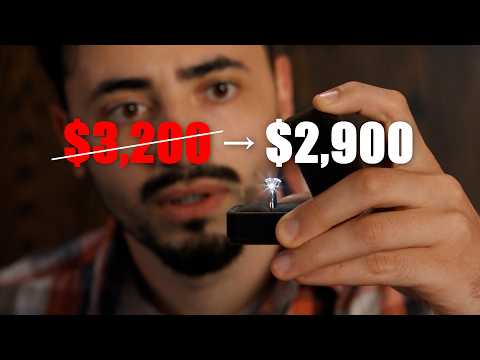
Seedance 2.5 again appeared in more short films than any other model, and two prompt-sharing posts, a 3D ice-cream dream and a Korean-drama revenge comedy, print their full scene lists. A 30-second vertical drama that we listed yesterday with 106 views has passed 105K, and a Renoise witch short reached 113K views while advertising the platform's Halloween offer. Much of the rest is promotion: Kling 4.0 on Higgsfield is pitched through a jeweller's discount story (the maker's own claim), and a Vidu Q4 spec ad for a fictional gum carries a referral code.
On the quieter side, a stop-motion-style short has one like, a Seedance and Blender action short was only hours old, and a Nano Banana account keeps its prompts behind a Telegram link, so those images cannot be reproduced.
What to watch next
Watch whether storyboard-grid and per-shot-frame workflows spread beyond a few repos, and whether the open ComfyUI apps keep a user base after the challenge closes. Tell us which topics to chase next: a medium, a tool, or one of these stories, and the next edition will steer there.






 Great Creation Studios