The full report
Locking the look before you generate
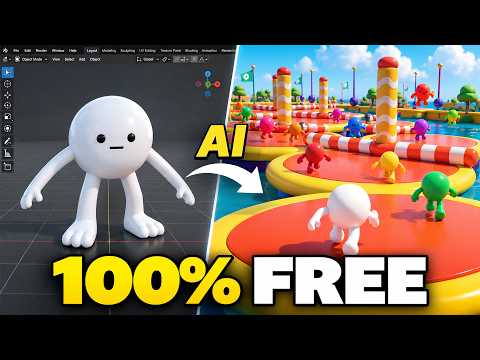
The clearest pattern today is people planning the inputs so the model cannot drift. The video-to-texture repo makes the idea literal: because the AI video is generated from the maker's own Blender orbit, every frame has a known camera, so the paint can be fitted back onto the original mesh without any new geometry. A 30-second Mayfair 1995 short does the same in a film setting, with a four-panel character sheet and a six-view car board feeding one prompt that fixes lens, distance, light colour and grain for each of eight cuts. That post is also an ad for the maker's studio, which sells the prompt for 1.99 pounds.
Two repos go further and remove generation altogether. reel-studio is the Blender setup behind a sketch-comedy Instagram account: a storyboard file goes in and a finished vertical reel comes out, with no AI image or video generation. A second repo, a 30-second Gothic cathedral cinematic, says everything except one credited character mesh is code written by an AI and checked by a human.
Designers move the work into code
One designer wrote that they left Figma after 8 years. Their team now keeps three linked GitHub repos, one for the product brief, one for design and one for production, designs in Cursor or Claude directly in the repo, and uses a verifier agent to check every pull request. A reverse-engineered, open-source rewrite of Picasa and a Codex skill that turns product details into ad scripts and Seedance videos show the same move toward agents doing the repetitive steps.
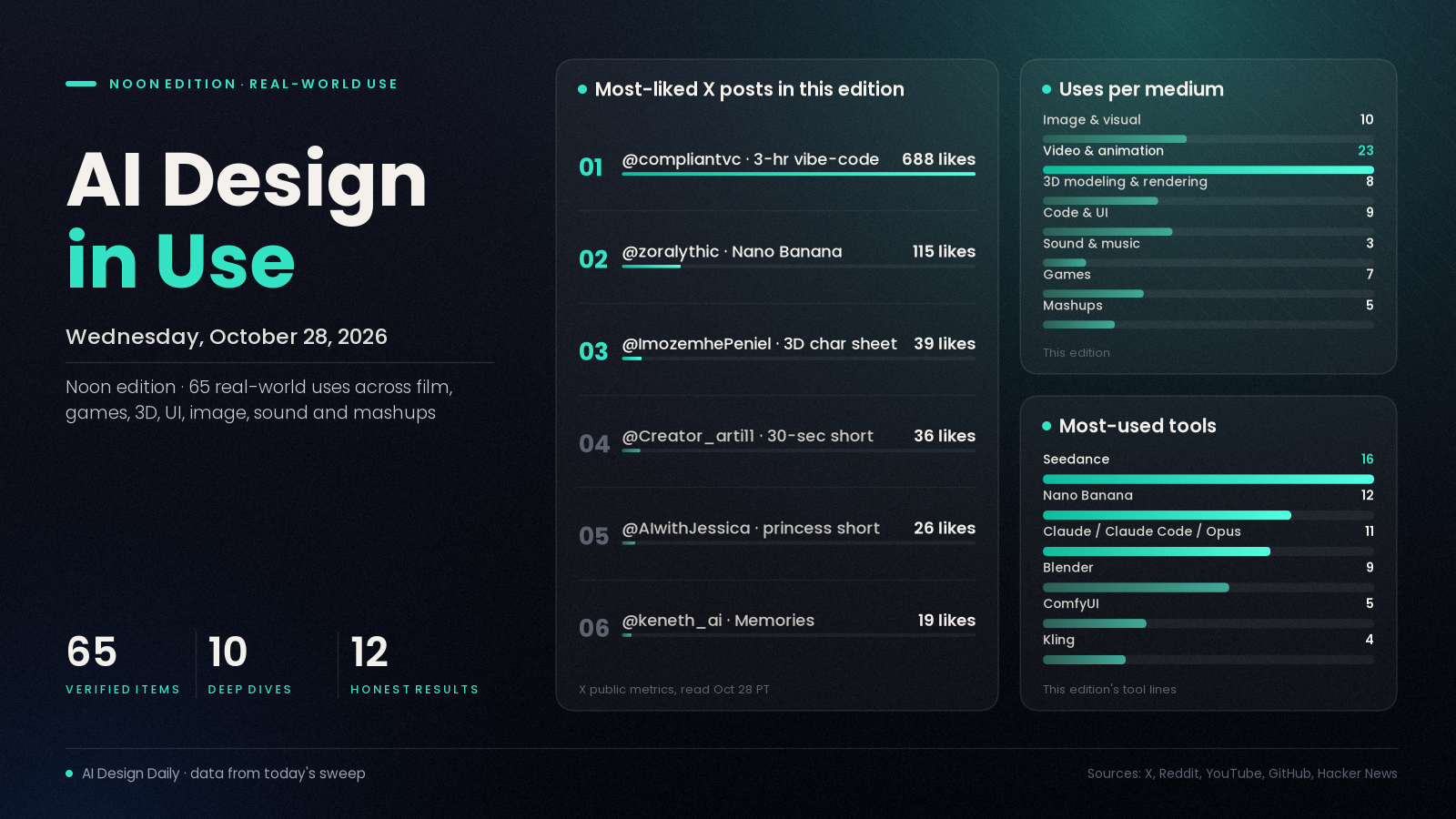
Not every viral claim holds up. The post with the most likes and views in this edition says it vibe-coded something in three hours that took a team three weeks; its picture is a cookie-consent banner, and no tool is named. We list it because it shows what gets attention, and it is labelled as unverified.
Video: Seedance 2.5, a new Kling, and a lot of ads
Seedance 2.5 appeared in more short films than any other model, from a candlelit fantasy and a 30-second vertical drama to a watercolor samurai duel. Kling 4.0 arrived on platforms such as PixVerse and Higgsfield, and YouTube was full of Kling 4.0 versus Seedance 2.5 comparisons, which we list by title only because we could not read their verdicts.
Many of the most-viewed posts are marketing. The fantasy princess short carries a referral link, the Kling sci-fi short advertises 10 days of unlimited use on its platform, and the London film sells its prompt. Smaller, more honest builds sit beside them: a first-timer who directed about 40 MiniMax H3 clips into a music video for their own song, a Renaissance-faire intro for a friend's campground map, and a history short made in what its maker says was 40 minutes of work.
Image, sound, 3D and games
Nano Banana 2.1 now shows up inside other companies' tools: a character reference sheet on ElevenLabs, a Matrix pixel-art collage on Atlas Cloud, and a short film step in OpenArt. Open-model users spent the day on Krea 2 and MOSS-Image, including a MOSS character LoRA trained on an AMD card under Windows.
In sound, the day was quieter: a tutorial on turning Suno songs into covers, a creator reporting a failed batch of Suno V6 songs by the title, and ALLOY, whose Suno track anchors a whole music video. In games, a TRON light-cycle browser game lets players describe a rider and have Hunyuan 3D build the model, and the ALLOY music video from yesterday's teaser is now out with every tool named, from Suno and Wan 3.0 to Blender and Three.js.
What to watch next
Watch whether known-camera and reference-board methods spread beyond a few repos, and whether design teams that move review into GitHub keep doing so. Tell us which topics to chase next: a medium, a tool, or one of these stories, and the next edition will steer there.







 Great Creation Studios