The full report
Control over volume
The strongest pattern today is makers building tools to manage the output of video models rather than to make more of it. Picky is the clearest case: after about 1,200 H3 renders for 85 keepers, its author filed every take under its scene with the exact prompt and seed, and added a lint for known H3 misreads. Around it sit smaller control tools for the same model. Dials turns a pair of prompts into a 14 KB motion slider, MotionBridge retargets H3 motion onto your own rig, Komikku designs a manga page first and makes each panel one shot, and h3-motion lets you drag a subject along a path.
Several of these (Picky, h3-motion and Kubrick Space) are entries in Comfy's open-source challenge, and many share a shape: a timeline or storyboard on top, a generation engine underneath. Sonder Editor puts a timeline in front of the ComfyUI graph, and a Mac port of Pika H3 Flex reports timings for running the same model on different hardware. Those speeds are the porter's own numbers (about 5 minutes for a short clip on an M4 Max).
Kling 4 and Seedance want different inputs
Seedance 2.5 and MiniMax H3 are the video models named most often in the tool lines, but Kling 4 had its own day. Kling's account launched 'Kling AI Originals' with a Halloween film by Alex Duloz, and a filmmaker posted a Crystal Method homage with notes that read like a correction: Seedance-style character sheets do not work well in Kling 4, which prefers finished still frames, Elements for extra consistency and long prompts.
YouTube has plenty of Kling 4 and model-comparison videos, but most carry sponsors or referral links. One tests eight models on an architecture brief (sponsored by Higgsfield), one is a Kling 4.0 horror test made in collaboration with Kling, and a Korean workflow update describes nearly a thousand H3 generations and why a merged model (DenoMix) was built to balance prompt-following against look.
Halloween shorts and referral codes
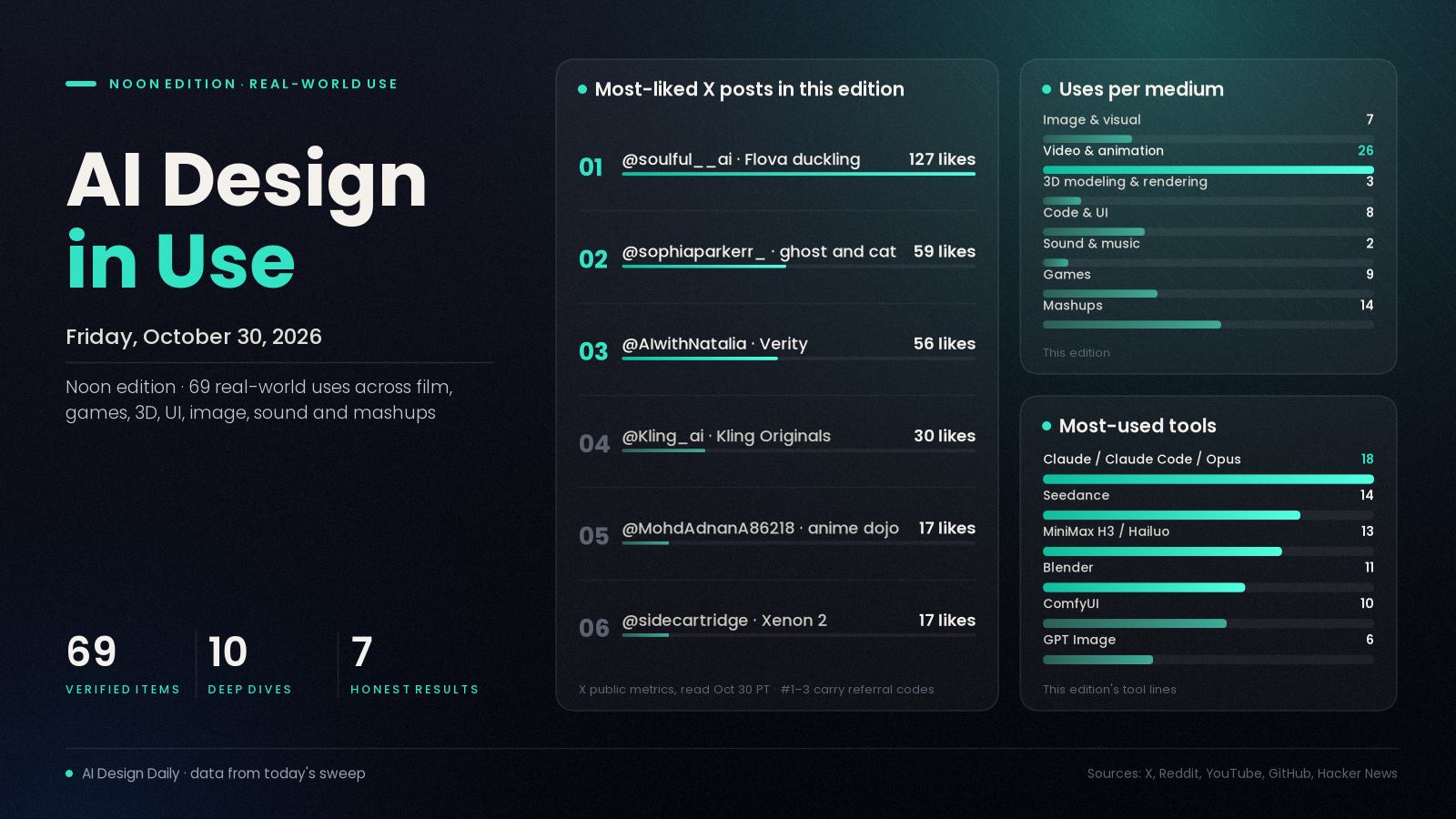
At least five of the 25 X posts from the gathered list are Halloween shorts (a ghost and a cat, Kling AI Originals, SOUVENIR, the Crystal Method homage and STILL YOU), and the three most-liked are all Flova posts made with the same Scripted Short Film skill and Seedance 2.5 (a duckling and snail story at 127 likes and about 10.5K views, then a ghost-and-cat film and a book-themed short). Each carries the poster's own referral code (not ours), so each card is marked promotional. We list them because they show what people are making right now.
The posts that teach something are quieter. One short lists its build exactly (9 reference images, 10 shots, 26 words of dialogue, 30 seconds), and two others print the full scene prompt so you can paste it. On Reddit, titles like a '$28,775 film' or a 'one character across 48 shots' short make claims we could not check because the feed carries no description, and one commenter called cost-bragging posts 'cringe'.
Agents as studio hands, with and without hype
Xenon 2 Megablast at 50 frames per second is the plainest account of using an AI agent seriously: tests, guardrails, and work split into epics, stories and tasks. A $140 horror short and a five-day 3D game say a Claude agent drove the tools (Flora AI in one case, Blender and ElevenLabs in the other), with every cost and count self-reported.
On the design side, a post recommends two open-source skills to escape the default 'AI look' (impeccable and hallmark; GitHub shows about 96.7K and 42.6K stars), and new, tiny repos aim at the same gap: a skill that learns taste from reactions, one that rebuilds a prototype in Figma with your design system, and one that teaches Claude to animate in Quar Animator. All three are hours old with 0 to 3 stars, so they are signals of interest, not proven tools.
Small and strange
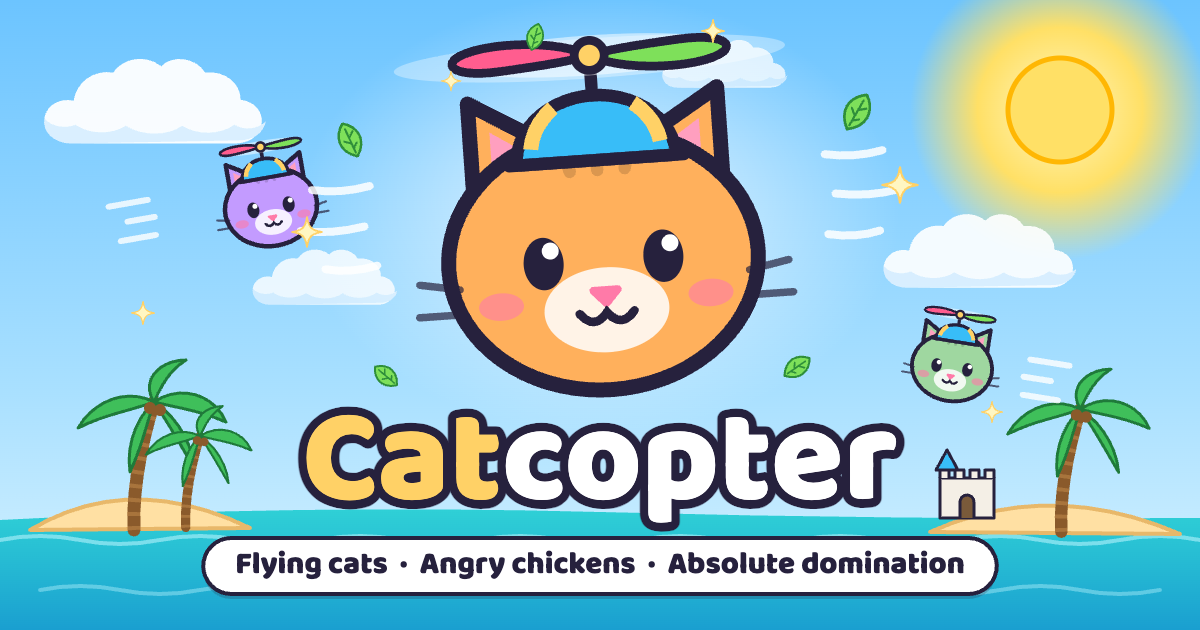
Catcopter, a browser game where you fly an armed cat, names which model did which job (Opus 5.5 for objects, rigging and motion; Tripo3D for a few elements; Fable for optimisation) and says it took about a week. Sketch Stadium lets AI agents play Pictionary against each other, and Tiny Harbor builds a tilt-shift island village in Godot 4 with Blender driven over MCP.
What to watch next
Watch whether take management and prompt linting become normal parts of H3 and Kling workflows, and whether the open ComfyUI studios keep users after the challenge. Tell us which topics to chase next: a medium, a tool, or one of these stories, and the next edition will steer there.







 Great Creation Studios